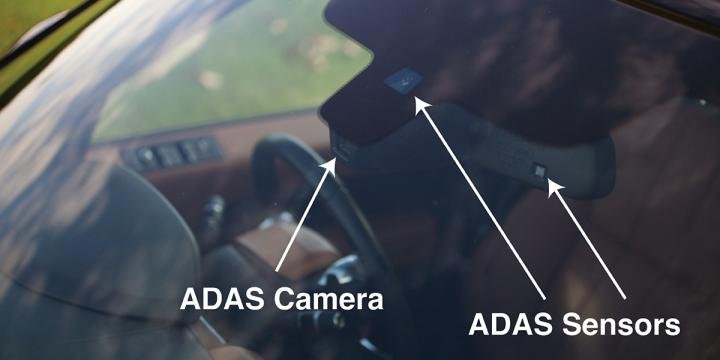

Advanced Driver Assistance Systems (ADAS) are vehicle features designed to assist drivers with certain driving tasks or provide warnings. Depending on the vehicle, they may support lane-departure warnings, lane-keeping assistance, forward-collision warnings, automatic emergency braking, and traffic-sign recognition.
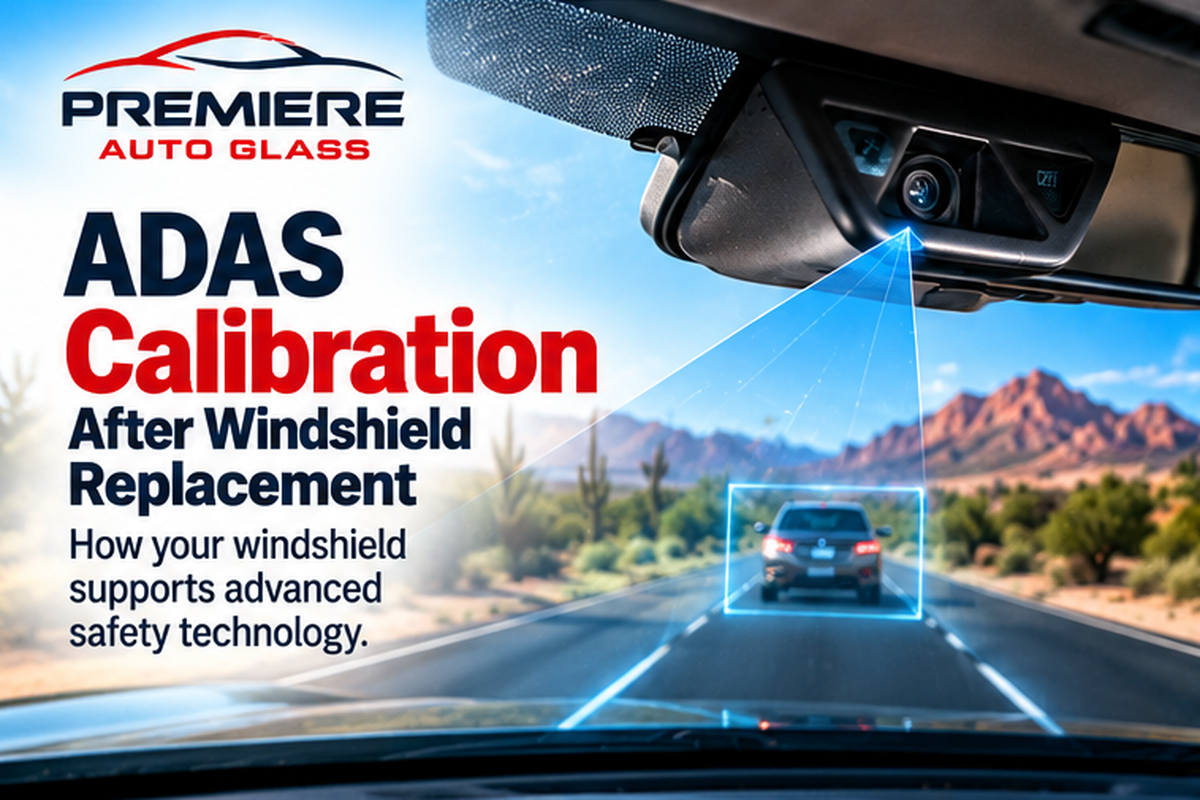
Understanding the connection between windshield glass and modern driver-assistance technology.
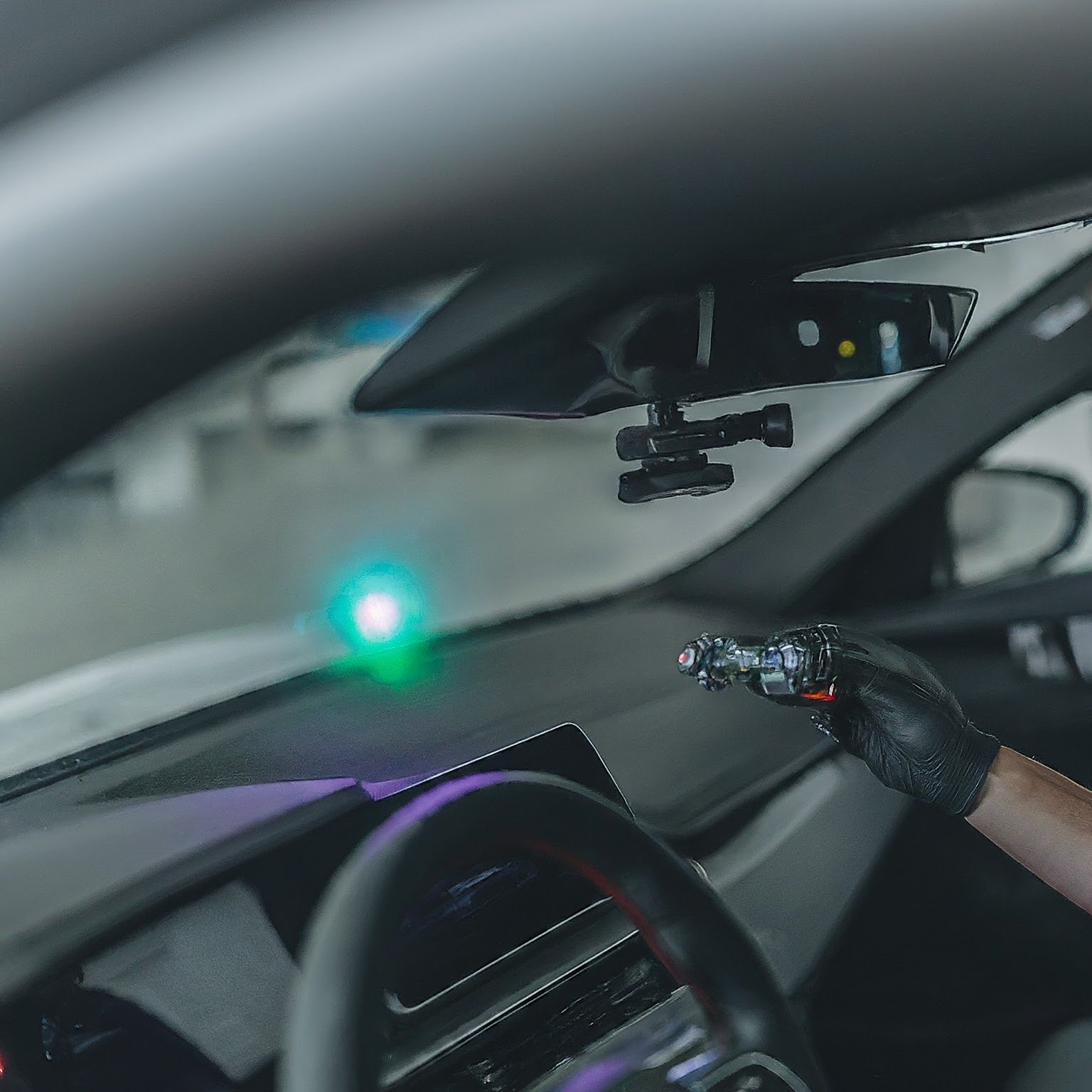
Many vehicles position a forward-facing camera near the rearview mirror, looking through a specific area of the windshield. Replacing the glass can change the camera’s relationship to the glass or require removal and reinstallation of camera-related components.
Vehicle manufacturers may specify calibration or verification after windshield replacement, even when no warning light appears.
The correct procedure should come from vehicle-specific service information — not from a general rule of thumb.
Uses targets, measured distances, and controlled setup conditions while the vehicle is stationary.
A prescribed road drive under specific conditions so the system can complete its learning or alignment process.
Some vehicles require both procedures — depending on manufacturer, model, model year, and equipment, not just the brand badge.
A qualified technician follows a precise, manufacturer-specified procedure to ensure your ADAS systems work correctly.
The technician looks up the manufacturer's instructions for your exact vehicle.
Tire pressure, ride height, alignment, load, lighting, and available road markings — all may matter.
Approved targets, measured distances, or a prescribed road drive — depending on the method.
Every step is followed as required — no shortcuts, no assumptions.
The technician verifies the calibration and investigates any relevant diagnostic trouble codes or warnings.
A successful glass installation and a successful calibration are related but distinct tasks — each must be verified on its own.
No single rule covers every vehicle. Some windshield replacements require calibration, while other vehicles or configurations may not.
A vehicle can also have more than one sensor that requires separate procedures.
Ask the installer to check the manufacturer's instructions for your exact vehicle.
Request documentation of whether calibration was required and whether it was completed.
Watch for these warning signals after a windshield replacement or calibration. If any appear, request a professional review.
A system alert appears on your dashboard or infotainment screen.
A driver-assistance feature is disabled or cannot be activated.
The lane-keeping or lane-departure system behaves erratically.
Any other unexpected behavior of the ADAS system warrants review.
The absence of symptoms is not proof that a required calibration was performed. Always confirm with your installer that calibration was completed.
These five questions will help you confirm that your ADAS systems are handled correctly — and that you leave with full documentation.
We offer professional windshield replacement and in-house ADAS calibration services. Share your vehicle's year, make, model, and safety features when scheduling so our team can explain the applicable process.
Same-day mobile service with OEM & OEM-approved glass. Up to $450 cashback available on insurance-approved replacements. Backed by a lifetime warranty for as long as you own your vehicle.
Learn MoreIn-house static, dynamic, and dual calibration performed by certified technicians. Manufacturer-specific procedures to keep lane-keeping, adaptive cruise control, and automatic emergency braking accurate.
Learn MoreFor windshield replacement, damage assessment, or ADAS calibration questions, contact Premiere Auto Glass. Our team is ready to help.