Quick Blog Summary
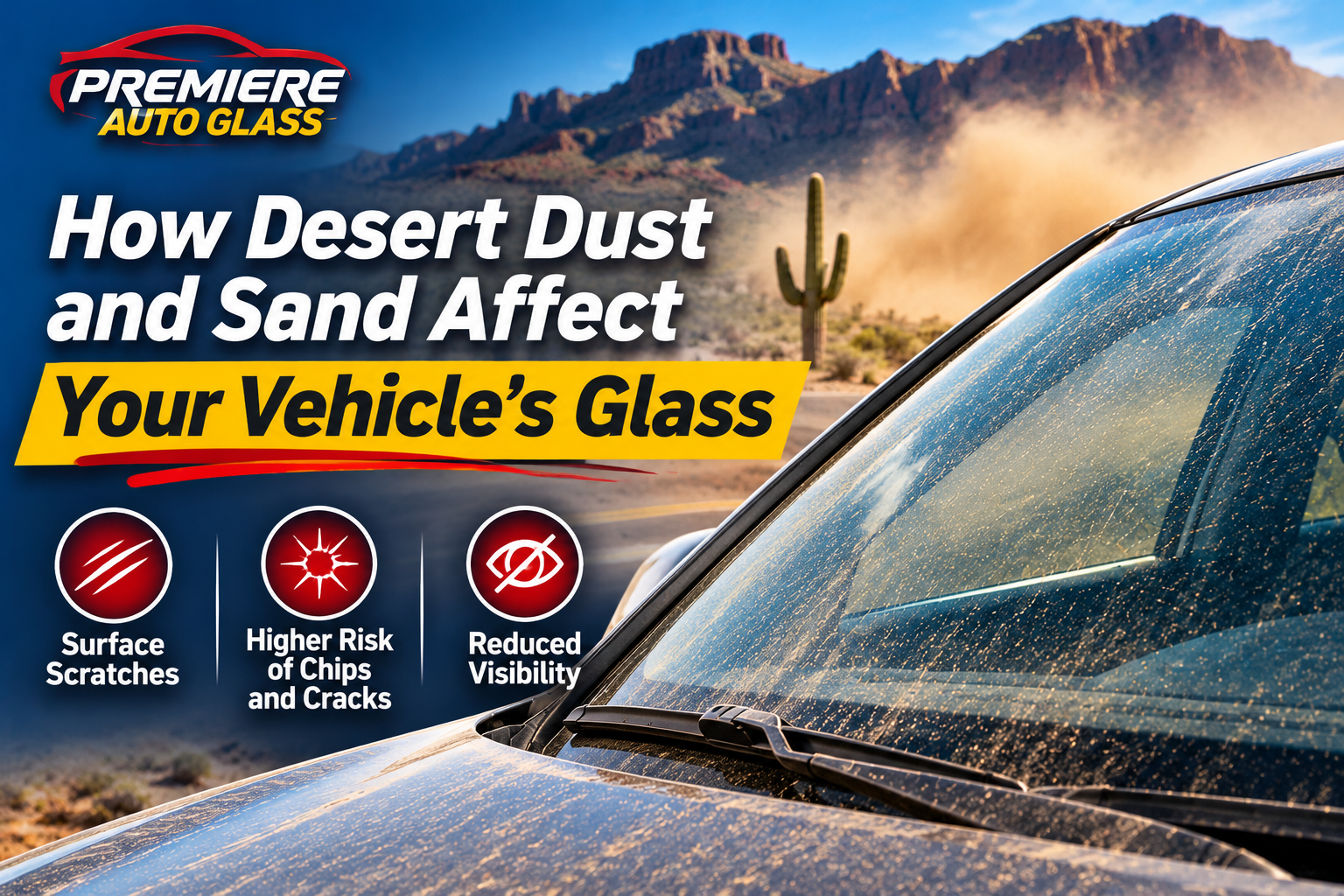
This blog explains how Phoenix dust storms and blowing sand can damage windshields through scratches, pitting, chips, and wear around the glass seals. You’ll learn the difference between pitting and chipping, how heat makes existing damage worse, and what to do during and after a dust storm to protect your vehicle. It also covers safe glass-cleaning methods, parking precautions, insurance considerations, and when professional repair or replacement may be necessary.
Introduction
Imagine it. It’s a Monday evening in August. You’re on the 202 heading home and the sky to the south is all wrong. It’s not a cloud, it’s a wall. It’s a brown wall, it’s quite tall and it’s moving very quickly. You see the edge of it and the lights of the car in front are already gone. You slow down, switch on your hazard lights and pull over with your heart in your mouth. Ten minutes later the storm’s over and you get out to find your windscreen covered in a fine gritty film.
That’s a scene we hear all the time at Premiere Auto Glass. Phoenix drivers know dust. We all have our own stories. The one that really sticks in the memory is usually the one that comes after the storm, when you go to inspect the glass and find damage that was completely invisible during the storm.
Here’s what desert dust and sand do to your windscreen, why it accumulates over time and what you can do about it.
What a haboob actually is
A haboob is a dust storm driven by the outflow from a thunderstorm. The downdraft of the storm hits dry desert ground and picks up the loose soil. The wind then builds that dust into a rolling wall which can rise thousands of feet.
The NWS define haboobs as dust storms resulting from the outflowing winds of an approaching thunderstorm. That’s why they’re a feature of Arizona during monsoon season (roughly June through September). Dry ground and fast wind = a lot of dust.
The NWS define a haboob as a dust storm resulting from outflowing winds from an approaching thunderstorm (which is why they’re so prevalent in the monsoon months).
How bad can it get
Some storms are mild, some are severe. ASU researchers helped develop a severity scale for dust storms and the top end of that scale represents the most severe events. Two Category 5 storms hit the Phoenix area in early August 2026 and the researchers described those as being unprecedented in the local record. Visibility was down to half a mile during both of those events.
Storms of that nature aren’t just a bother. They can reduce visibility to nothing in a matter of seconds and leave a huge amount of material on every surface they come into contact with.
| Storm element |
What it does to your car |
Why it matters |
| Wind speed |
Pushes sand and grit hard against glass |
Faster wind means more impact energy |
| Fine dust |
Settles into seals, trim, and cracks |
Holds moisture and grinds against surfaces |
| Coarse sand |
Scratches and pits the glass |
Causes permanent surface damage |
| Low visibility |
Makes it hard to see the road |
Raises the risk of a crash |
| Heavy rain after dust |
Turns dust into mud on the glass |
Smears the view and drags grit across the surface |
Why sand is harder on glass than you think
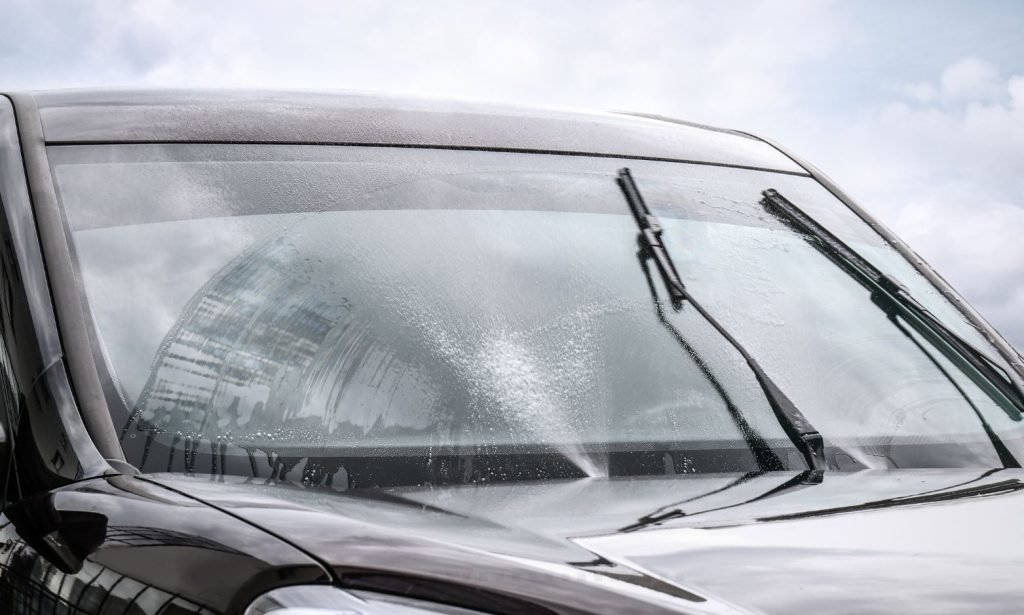
Sand is predominantly quartz and quartz is hard. Glass is hard as well, but sand can still scratch it when the wind is driving the grains across the surface. Each grain that hits the windscreen leaves a mark. A few hundred marks are hardly noticeable at all. Thousands of them start to haze the view.
That’s what they call pitting. The surface looks frosted, particularly in the sun. At night the pits scatter the headlight glare. You’ll often be the first to notice it on the road ahead where the oncoming lights turn into starbursts.
The Phoenix Fleet team have described dust storms as being very tough on paint and glass when the vehicles are left out in the open and that’s exactly what we’re seeing in the shop.
As per the Government Fleet report on Phoenix dust storms, blowing sand is extremely abrasive and will, over the long term, abrade the windscreen and reduce headlight output.
Pitting versus chipping
Pitting and chipping are similar at first glance but they’re actually two different things. A chip is a single break in the glass, typically caused by a rock. Pitting is a spread of very small surface marks, generally caused by sand and grit blowing across the glass.
Chips can often be fixed with resin. Pitting is much harder to get rid of. Polishing can help in some instances, though in the case of heavy pitting it’s often just down to replacing the glass. It’s surface damage and once it’s there you can’t really reverse it.
| Damage type |
Cause |
Typical fix |
| Chip |
Rock or debris impact |
Resin repair if small and clean |
| Crack |
Stress from chip or temperature swings |
Replacement if long or near edge |
| Light pitting |
Fine sand over time |
Polishing in some cases |
| Heavy pitting |
Repeated storms or long exposure |
Replacement |
| Edge damage |
Impact or frame stress |
Replacement |
The dust that gets into everything
Dust doesn’t just sit on the glass. It works its way into the seals around the windscreen, the trim, the wiper cowl and the gaps right up around the mirrors. Given enough time that dust can actually wear through the rubber, loosen the seal and allow water in on the next occasion.
We see this all the time. A customer walks in with a leak they’ve put down to a bad seal, it’s actually grit which has ground the rubber down. A fine line of dust in the corner of the glass can turn a minor problem into a very expensive one.
Keep the cowl area clear, rinse out any debris after storms and check the seal edges for cracks or gaps. If you spot anything odd just let your technician know.
The sun makes it worse
Dust and heat work in tandem. Phoenix summers will push glass well past the point that most people would expect. A windscreen sitting in the sun all afternoon will have a very hot outer surface. The dust on the glass can actually trap the heat and that will exacerbate any existing chip or crack through the temperature cycling.
That’s one of the reasons you often see small chips grow up after a dust storm. The chip was there already, the grit got in and the afternoon sun did the rest.
The Automotive Glass Research Council states that a repair is only possible on clean dry damage and with proper cure, which is why dust and moisture inside a chip will make a repair more difficult.
What to do during a dust storm
The most important step (and indeed the simplest) is to get off the road. The Arizona Department of Transportation advises drivers to pull over, stay off the road and stay alive when a dust storm is underway. If you can’t see the road ahead then stop where it’s safe, switch on your hazard lights and wait.
Don’t keep driving because you think you can make it home. Visibility can drop to nothing in a matter of seconds and the car behind you may not see you at all.
If you’re parked then get indoors if you can. If you can’t get indoors then park as far away from trees, power lines and loose objects as possible. Close the windows and keep the vents on recirculate to keep the dust out of the cabin.
What to do after the storm
Once the storm’s over, take a few minutes to inspect your car. Look at the windscreen in the daylight for any new pitting or chipping. Have a proper look at the seals, the wiper area and the paint right near the top of the hood. Wipe the glass down with a soft cloth and a good auto glass cleaner.
Change your cabin air filter if the dust has got in. A blocked filter will reduce airflow and allow more dirt in. Run the AC on recirculate for a few minutes to clear the air.
Get a windscreen check fairly soon after a major storm, particularly if you spot a haze, a new crack or a glare issue at night.
Cleaning without making it worse
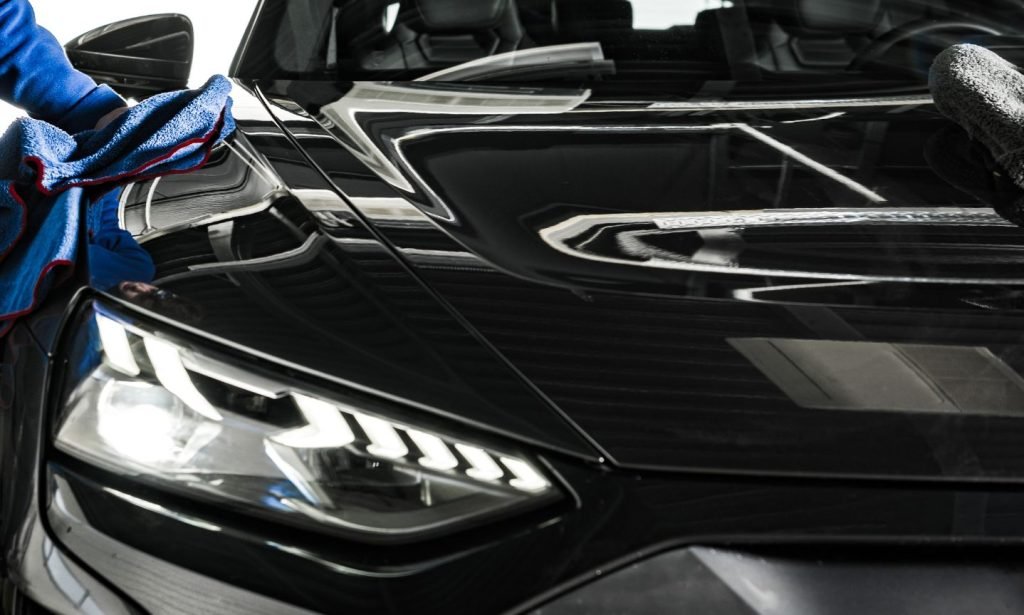
Dry dust on glass will scratch if you wipe it with a dirty cloth. Rinse the windscreen thoroughly with plenty of water first to lift the loose grit. Then clean with an automotive glass cleaner and a clean microfibre cloth.
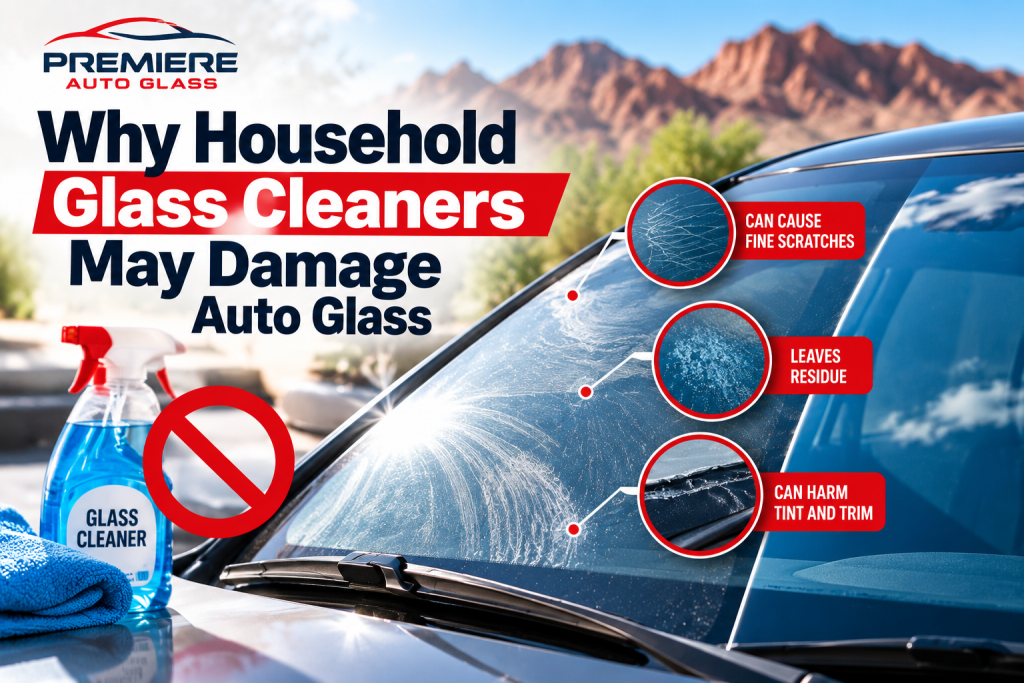
Avoid dry wiping, avoid the household cleaners with ammonia and avoid paper towels. Those can all leave micro-scratches which will add to the haze over time. Clean the wiper blades as well as they’ll be dragging all that grit across the glass every time you use them.
Parking and protection
You can’t stop every storm. You can just reduce the amount of damage the storms do. Park in a garage or carport if you can. Use a windscreen sunshade to cut down the heat and UV. Keep your car clean as well so that grit doesn’t just sit on the glass and paint for weeks at a time.
Replace the worn wiper blades prior to monsoon. Old blades will smear the glass with grit and leave streaks. A fresh pair makes a huge difference in heavy dust and rain.
Insurance and what to expect
Lots of comprehensive policies will cover glass damage as a result of storms and debris (so that would include chips, cracks and in some cases a full replacement). Pitting cover is variable so it’s worth checking your policy and asking your insurer whether it would be covered as glass damage.
The Insurance Information Institute have an explanation of how comprehensive coverage deals with glass claims, which is useful if you’re calling your insurer following a storm.
The III point out that comprehensive covers glass damage caused by storms and debris so it’s worth checking your policy following a major weather event to get you going as quickly as possible.
Final Verdict
Desert dust and sand are part of life in Phoenix. It comes in fast, it leaves a lot behind and it’s going to be working on your glass long after the storm has passed. Pitting, grit in the seals, sun heat on existing chips etc. all add up over the seasons.
The good news is you can do something about it. Get off the road when visibility becomes poor. Clean the glass properly. Check the windscreen after a major storm. Fix any chips as soon as possible and replace your wipers before the next season comes around.
If your windscreen is hazy, has new pitting, or has a chip or crack after a storm then get in touch with
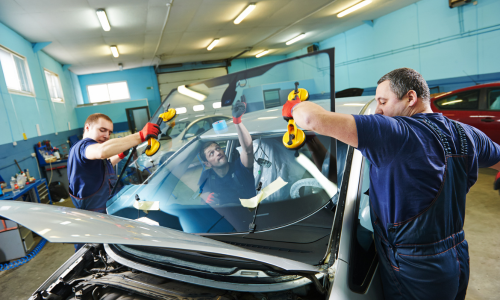
the Premiere Auto Glass team. We’ll have a look at the glass, let you know what we see and then help you to decide on the right repair for your car and your budget.
FAQs
Can actual dust really damage my windscreen?
Yes, blowing sand is abrasive and can pit the glass, scratch the surface and haze the view over time. A heavy storm can do more damage in a single event than a few months of normal driving.
Is pitting due to sand fixable?
Light pitting can be improved with a good professional polish. Heavy pitting on the other hand will generally require replacement as the damage is in the glass. A glass technician can have a look at the glass and let you know whether it’s worth polishing or whether it’s definitely going to need replacing.
What are you to do if you’re driving and a dust storm hits?
Pull off the road safely, switch on your hazard lights and just wait for the storm to pass. Don’t carry on driving if you can’t see the road at all. Visibility can drop to zero in the space of a few seconds.
How do I clean dusty glass without scratching it?
Rinse the glass with water first to lift any loose grit. Then use an automotive glass cleaner and a clean microfibre cloth. Don’t dry wipe and don’t use any of the household cleaners that contain ammonia.
Does parking in the shade help?
Yes. Shade keeps the glass and interior cooler and reduces UV exposure on the seals and trim. A garage or carport is best, and a windshield sunshade helps when you can’t park under cover.
Also Read:
-
-
-
 Skip to content