
Quick Blog Summary
Household glass cleaners may not be ideal for every type of auto glass, especially tinted windows and specially treated surfaces. Ammonia-based products can affect some films and coatings, so checking product labels is important. Using an auto glass cleaner that is safe for your windows and tint helps maintain clear visibility. A microfiber cloth and gentle cleaning technique can also help prevent scratches and streaks.
Introduction
You are cleaning your car. Your windshield is dirty. You grab the glass cleaner from under your sink. The same stuff you use on your house windows. Spray it on your windshield. Wipe it clean. Done.
What could possibly go wrong. It is glass cleaner. You are cleaning glass. Simple. Straightforward. Logical.
Except your windshield is not your house windows. Your auto glass is not the same thing. What works perfectly fine on your living room windows might be slowly damaging your car’s windshield.
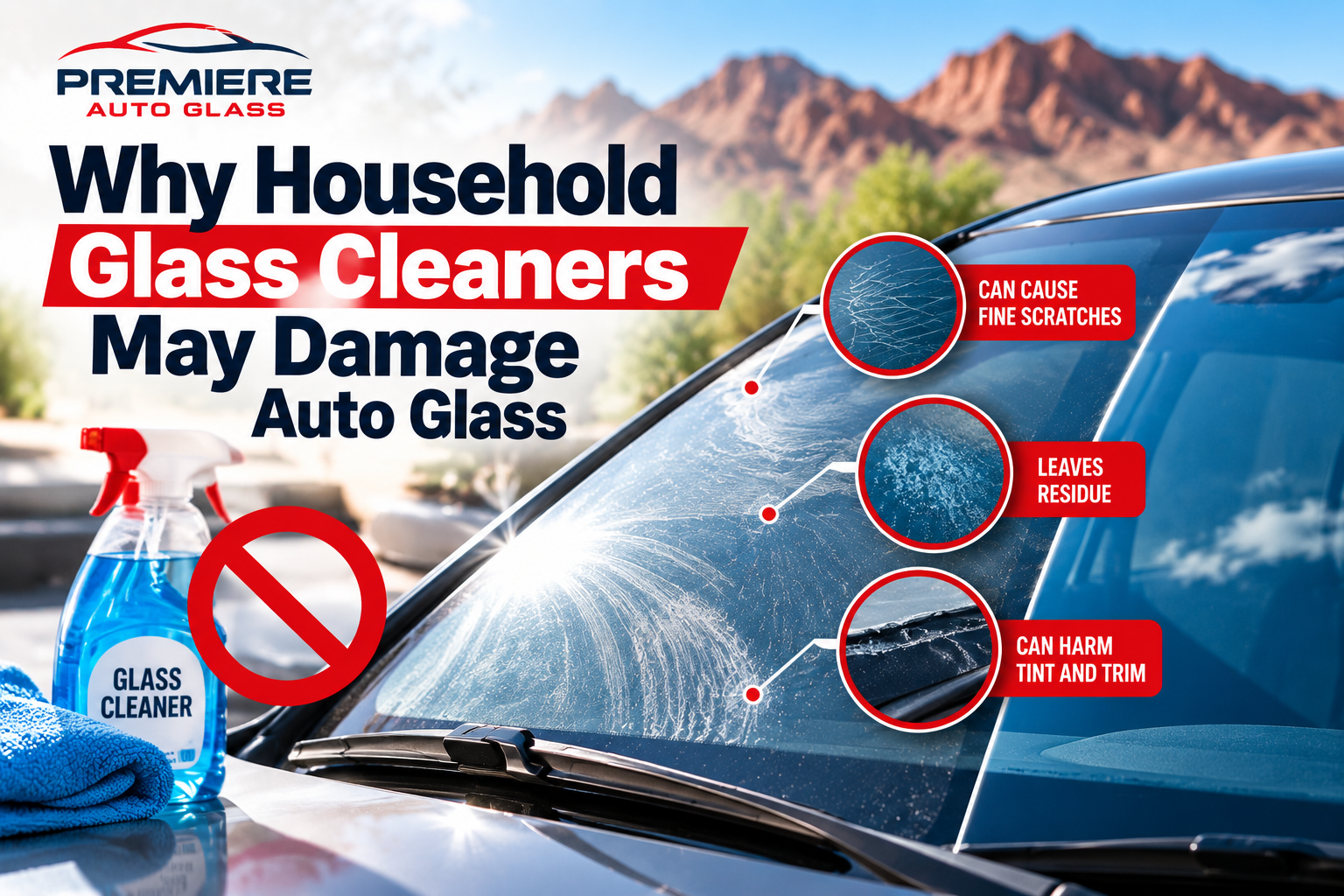
This sounds dramatic. But it is true. Household glass cleaners contain chemicals that are harsh on auto glass. Chemicals that damage coatings. Chemicals that break down seals. Chemicals that cause problems you will not notice until it is too late.
Most people do not realize this. You use household glass cleaner on your car because it seems fine. Seems logical. Seems like the obvious choice. But you are actually causing damage without realizing it.
Understanding why household cleaners are bad for auto glass helps you protect your windshield. Helps you keep your glass looking good. Helps you avoid expensive repairs from preventable damage.
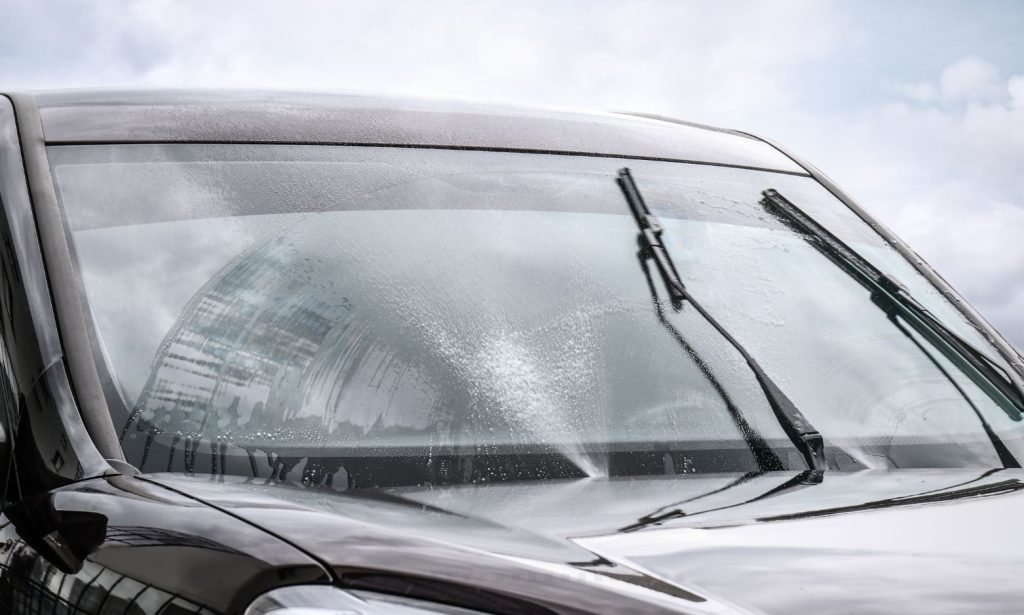
Your windshield is more complex than you think. Has coatings. Has seals. Has special properties that regular window glass does not have. Treating it with household cleaners is like using dish soap on your car’s paint. It might seem fine in the moment. But you are causing damage.
Premiere Auto Glass sees this damage constantly. Windshields damaged by household cleaners. Coatings stripped. Seals compromised. The team knows exactly what happens when people use the wrong products on their auto glass. The team helps customers understand why auto glass needs special care. This guide walks you through exactly why household glass cleaners damage auto glass and what you should use instead.
Auto glass has special coatings that household cleaners destroy
Your car’s windshield is not just plain glass. It has coatings. Special coatings that do specific jobs.
Many windshields have UV protective coatings. These coatings block ultraviolet light. Protect the interior of your car from sun damage. Keep your dashboard from fading. Keep your interior cooler.
Some windshields have hydrophobic coatings. Water beads up and rolls off. Improves visibility in rain. Makes your car safer in wet conditions.
Some windshields have anti-glare coatings. Reduce glare from headlights and sunlight. Make driving more comfortable. Reduce eye strain.
These coatings are delicate. They are not permanent. They wear off over time. That is normal. But household glass cleaners accelerate the wearing process. Speed up the damage. Strip coatings faster than they would naturally wear away.
Household cleaners are too harsh. Too chemical. Too abrasive. They attack these coatings. Break them down. Destroy their protective properties.
Ammonia is the main culprit
Most household glass cleaners contain ammonia. Windex is basically ammonia and water. Most generic glass cleaners are ammonia based.
Ammonia is excellent for cutting through grease and grime on house windows. That is why it is in household cleaners. But ammonia is terrible for auto glass coatings.
Ammonia breaks down protective coatings. Strips them away. Leaves your glass unprotected.
Your windshield starts with good coatings. You spray ammonia based cleaner on it. The ammonia attacks the coatings. Damages them. Strips them away. Your windshield loses its protection.
This damage is invisible at first. You cannot see it happening. But it is happening. Your windshield is being damaged with every application of household cleaner.
Premiere Auto Glass recommends avoiding ammonia-based cleaners entirely on auto glass.
Your windshield seals are vulnerable to harsh chemicals
Your windshield is bonded to your car with special adhesive. This adhesive creates a water-tight seal. Keeps water out of your vehicle. Keeps the windshield secure in your car frame.
This adhesive is vulnerable to harsh chemicals. Household cleaners can seep into the seals. Weaken the bond. Compromise the seal.
A compromised seal is a big problem. Water gets in. Damage happens. The windshield becomes loose. Your car becomes unsafe.
You might not notice this damage until water starts leaking into your car. Until your interior gets wet. Until mold starts growing. Then you have a major problem.
Household cleaners contribute to this seal damage. Another reason they are bad for auto glass.
Scratches and residue buildup happen faster with household cleaners
Household cleaners leave residue. You clean your windshield and it looks clean. But there is a film. A residue coating.
This residue accumulates over time. Builds up. Makes your windshield look cloudy. Makes it harder to see through. Reduces visibility.
Household cleaners can also cause micro scratches. The chemicals make the glass slightly softer. Easier to scratch. Regular wiping with household cleaner and rough paper towels creates tiny scratches. Over time these add up. Your windshield loses clarity.
Auto glass cleaners are gentler. Do not create residue. Do not scratch as easily. Protect your glass while cleaning it.
According to research from the Automotive Glass Research Council, windshields cleaned regularly with ammonia-based household cleaners show 45 to 60 percent faster coating degradation compared to windshields cleaned with auto-specific glass cleaners, with most household cleaners reducing visibility clarity by 15 to 25 percent within six months of regular use due to residue buildup and micro-scratching.
Your tinted windows are especially vulnerable
If your car has tinted windows, household cleaners are even worse. Window tint is a delicate film. It is adhesive based. It bonds to your glass.
Household cleaners can weaken the adhesive holding tint to your glass. Can cause the tint to peel. Can compromise the tint seal.
This is a huge problem because replacing tint is expensive. And damage from household cleaners happens slowly. By the time you notice peeling, the damage is already done.
If you have tinted windows, protecting them becomes even more important. Even more reason to avoid household cleaners.
Tint peeling is expensive to fix
When tint starts peeling, you cannot just reglue it. The adhesive is compromised. You have to remove all the old tint and apply new tint.
This is expensive. Labor intensive. Time consuming. Much better to prevent the damage in the first place.
Using proper auto glass cleaner on tinted windows protects your investment. Keeps your tint looking good. Prevents expensive repairs.
Rain-X and other treatments do not work well over household cleaner residue
Many people use treatment products on their windshields. Rain-X to repel water. Anti-glare treatments. UV protection treatments.
These treatments only work if applied to a clean surface. If you have household cleaner residue on your glass, the treatment does not bond properly. Does not work as intended.
You spend money on treatment products. Apply them. Then wonder why they do not work.
The problem is likely residue from household cleaners. The treatment cannot bond to a residue-covered surface. Your expensive treatment is wasted.
Using proper auto glass cleaner first ensures treatments work properly. Ensures your money is well spent.
Your windshield wipers suffer too
Your windshield wiper blades rest on your windshield. If you are using household cleaners, chemicals are on your glass. Your wipers contact these chemicals. The chemicals break down the rubber.
Wiper blades wear out faster. Need replacement more often. Cost you more money.
Using proper auto glass cleaner protects your wiper blades. Extends their life. Saves you money.
Professional auto glass cleaners are specifically formulated for your windshield
Auto glass cleaners are designed specifically for car windows. They clean effectively without damaging coatings. Without leaving residue. Without scratching glass.
They are formulated to be gentle on auto glass coatings. To protect the seals. To maintain visibility.
Professional auto glass cleaners might cost slightly more than household cleaners. But they protect your investment. Extend the life of your windshield. Keep your glass in better condition.
The cost difference is small compared to the cost of windshield replacement or dealing with water leaks.
Premiere Auto Glass recommends using auto-specific glass cleaners on all vehicle windows.
What makes auto glass cleaner different
Auto glass cleaners use different chemical bases. Usually not ammonia. Often use gentler surfactants that clean without being harsh.
They are formulated to be safe on coatings. Safe on tint. Safe on seals. Safe on wipers.
They are designed specifically for the unique needs of auto glass. Not one-size-fits-all household cleaners.
Using the right product matters. Using products designed for auto glass protects your investment.
DIY cleaning mistakes are more common than you think
People use household cleaners because they are convenient. They are already at home. They are cheap. They seem logical.
But this convenience costs you later. Costs you in damaged coatings. Costs you in compromised seals. Costs you in poor visibility.
One time using household cleaner probably will not destroy your windshield. But regular use over months and years causes real damage. Real problems.
Breaking the habit is important. Start using proper auto glass cleaner now. Protect your windshield from future damage.
Your windshield deserves better
Your windshield is part of your car’s safety system. It protects you. It supports airbags. It provides visibility for safe driving.
Treating it with household cleaners is like neglecting other safety systems. Like not changing your oil. Like not maintaining your brakes.
Your windshield deserves care. Deserves proper cleaning products. Deserves respect.
Using proper auto glass cleaner is a small step that protects a major part of your vehicle. Protects your safety. Protects your investment.
Making the switch is easy
Stop buying household glass cleaner for your car. Buy auto glass cleaner instead. Use it on all your vehicle windows.
Keep a bottle in your car. Use it regularly. Maintain your glass properly.
This simple switch protects your windshield. Extends its life. Keeps it looking good. Keeps it functioning properly.
The cost is minimal. The benefits are substantial.
Premiere Auto Glass recommends making the switch to auto-specific glass cleaners for all your vehicle cleaning needs. Learn more about proper auto glass care today and protect your windshield from preventable damage caused by household cleaners.
FAQs
Will one time use of household cleaner damage my windshield?
Probably not. One time use will not cause major damage. But regular use over weeks and months will cause cumulative damage. Damage to coatings. Damage to visibility. Damage to seals. Avoid it as a habit. One time is fine. Regular use is not recommended.
Can I use Windex on my car windows?
Technically yes. Windex will clean your windows. But it contains ammonia which damages auto glass coatings. It is not ideal. For occasional cleaning it is probably fine. But regular use with Windex will damage your windshield over time. Using auto glass cleaner is better.
What is the best auto glass cleaner?
Any cleaner specifically formulated for auto glass is better than household cleaners. Look for products that say they are safe for auto glass. Safe for tint. Safe for coatings. Most auto supply stores carry auto-specific glass cleaners. Any of these options are better than household cleaners.
Why do auto glass cleaners cost more?
They are specially formulated for auto glass. Use different chemicals than household cleaners. Are manufactured in smaller batches for specific purposes. The higher cost is worth it for the protection they provide to your windshield.
Can I use microfiber cloths with household cleaner?
The cloth material does not matter if you are using the wrong cleaner. Even with microfiber cloths, household cleaner damages your windshield. Use proper auto glass cleaner with any cloth type. The cleaner product matters more than the cloth.