Quick Blog Summary
This blog explains how modern windshields have become an important part of a vehicle’s safety technology, with cameras, rain sensors, heated areas, and head-up displays built around the glass. You’ll learn why VIN checks, specialized tools, proper adhesive, and camera calibration are essential when replacing a windshield. It also covers what to expect during the replacement process, questions to ask an auto glass shop, and whether insurance may cover calibration costs.
Introduction
Your windscreen used to be simple really. Glass in. Glass out. That’s it.
That’s not how it works any more. Today’s cars have cameras, sensors and displays right behind the glass and they all have to line up perfectly. You can see the difference every day at Premiere Auto Glass.
So let’s talk about what’s changed, why it matters and what it means for you.
The windshield is part of the car’s brain
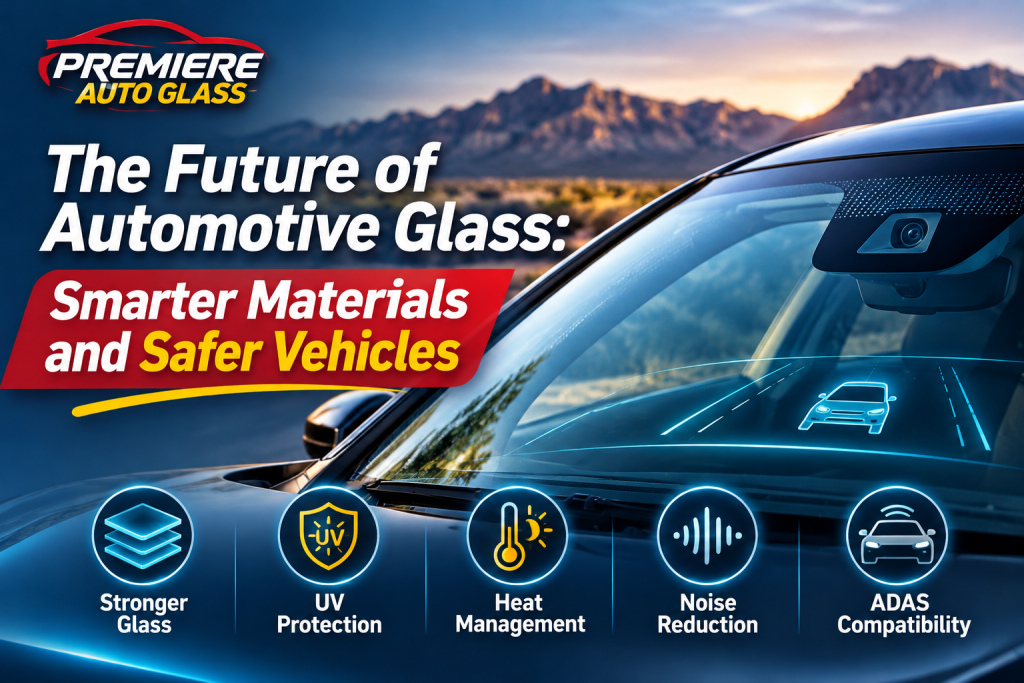
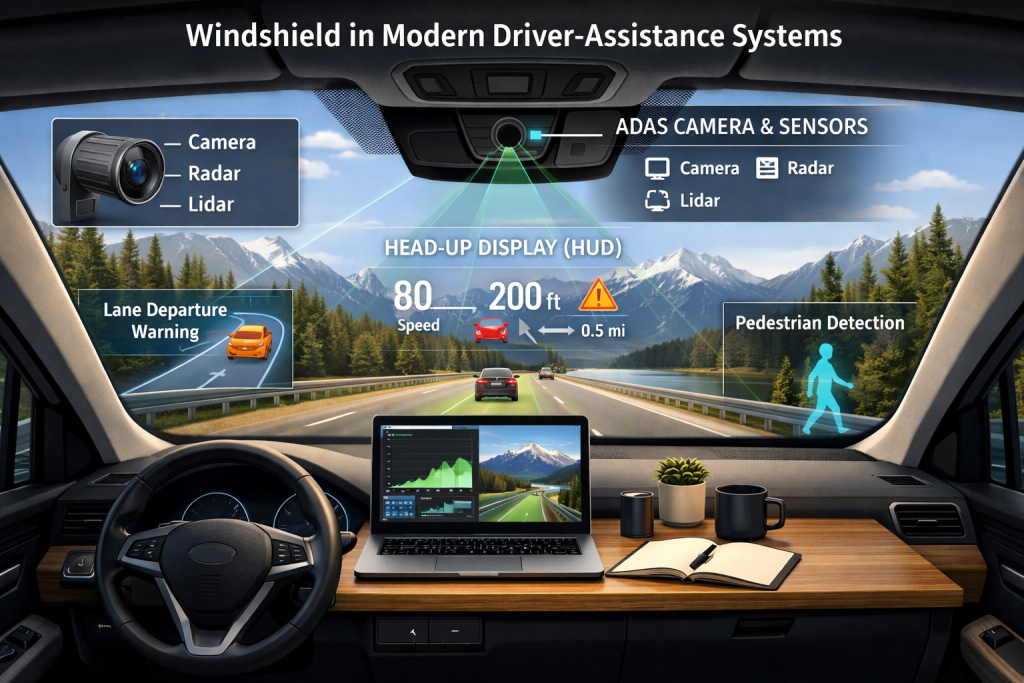
Back in the day a windscreen was purely there to keep the wind out. These days it’s got a whole host of functions. It can help to run the car. There’s a forward facing camera which can read the lane lines. There’s a rain sensor which knows when the wipers should come on. Some of the more advanced cars will even project your speed onto the windscreen.
All of that hinges on the glass being in the absolutely right place. If you move it even a little the system can go all to pot. That’s why a simple swap is no longer such a simple thing.
Cameras need a clear view
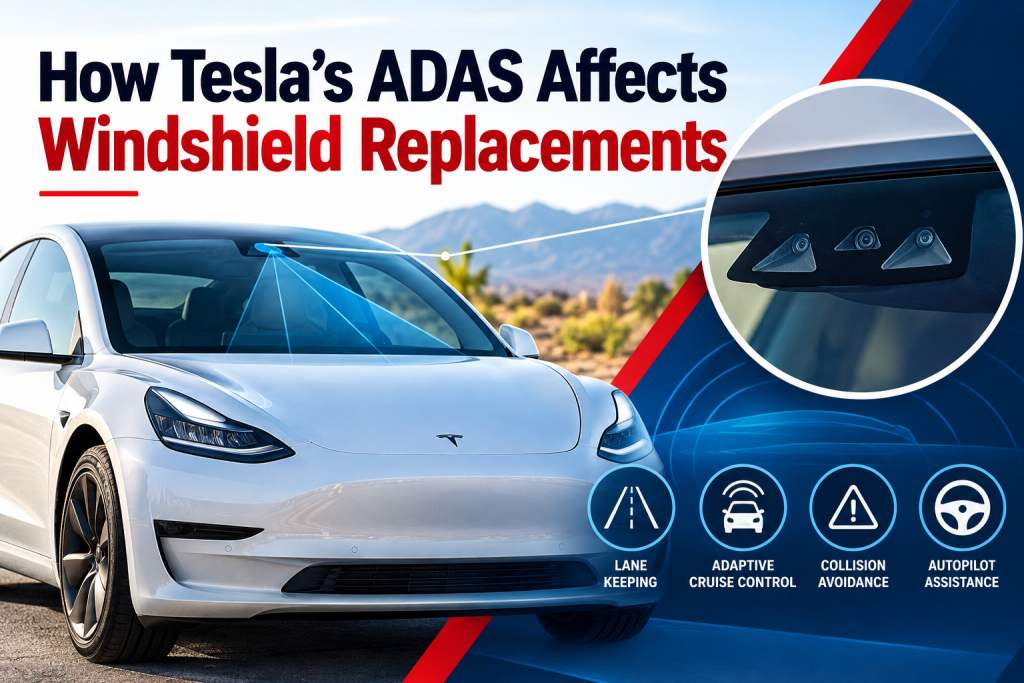
The vast majority of newer cars have a camera mounted on a bracket inside the windscreen. It looks through a small clear area and reads the road, the lines and the cars around it.
When we replace the glass the bracket has to be in exactly the same position. The camera needs to be in exactly the same angle. A tiny movement and the readings will be all wrong. A camera that’s reading incorrectly can either give a false warning or miss a genuine hazard.
Calibration is now part of the job
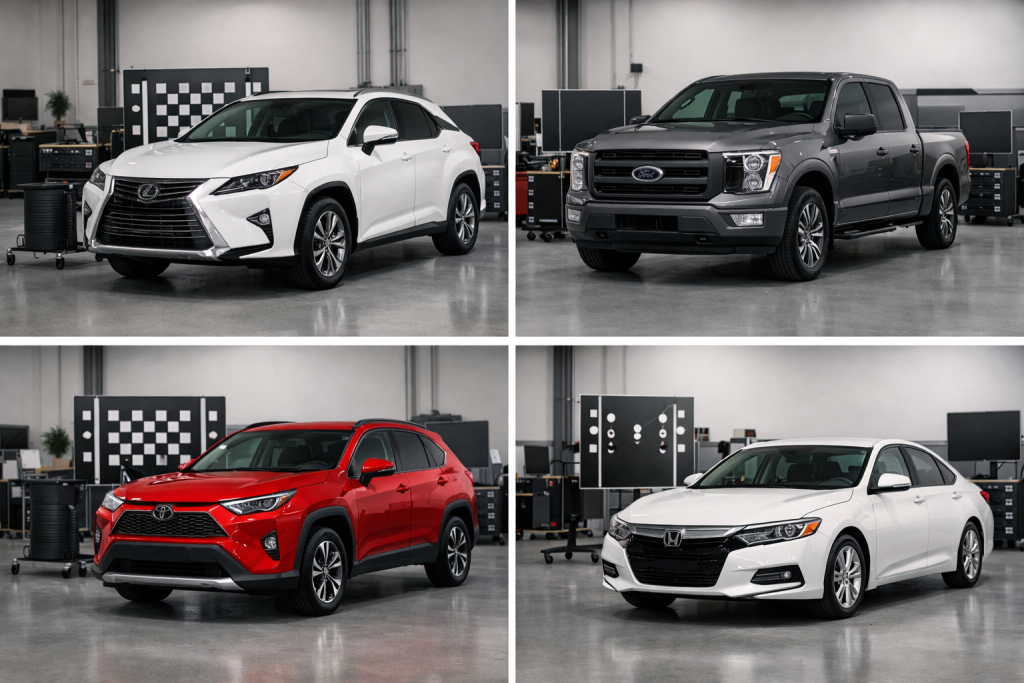
After a number of replacements the camera has to be calibrated. Calibration tells the system precisely where the camera is. It re-trains the car to read the road.
Some shops do the calibration on site using special targets and software. Others will send the car to a dealer or a specialist center. Either way it takes considerably longer than it used to.
We always tell the customer that. A quote without calibration may look cheaper but can in fact leave a safety system with no calibration at all (i.e. broken).
As per the NHTSA, ADAS relies on accurate sensor placement so small changes to the glass can have an impact on how well the systems perform.
Glass is getting more complicated
Windshields today do a lot more than they used to. Here are a few of the things we see.
- Rain sensors mounted behind the glass
- Forward cameras on lane keeping brackets
- Heated wiper areas and defroster grids
- Tint bands across the top
- Acoustic layers that cut road noise
- Head up display coatings that project speed and directions
Each feature adds a step. Each one requires the correct glass. Getting the glass wrong with the wrong feature set can be a problem.
Why the VIN matters so much
Two cars can be exactly the same and still require different glass. The trim level, the options and the production date all affect which glass you need. A base model might have plain glass whereas the top trim will have a camera bracket and a tint band.
That’s why we look at the VIN first. It tells us what your car came out of the factory with and that in turn enables us to order the correct windscreen. It makes the whole job so much easier once the old one’s out.
Specialized tools for specialized work
Good glass work now requires specialist tools. The techs will be using calibration targets, scan tools and sensor checkers. They’ll also need the correct adhesive and cure times for each vehicle.
Here’s a quick look at what different jobs normally require.
|
Job type
|
Typical tools
|
Why they matter
|
| Basic windshield |
Standard removal tools, urethane |
Gets the glass in and sealed |
| Rain sensor car |
Sensor alignment tools, scan tool |
Keeps wipers working right |
| Camera car |
Calibration targets, software |
Keeps lane assist accurate |
| Head up display car |
Specialty glass, alignment checks |
Keeps the projected image clear |
| Heavy duty truck |
Larger handling gear, extra trim tools |
Handles bigger, heavier glass |
Not every shop will have all of this kit. Always ask what they use before you book.
The adhesive matters more than ever
The glass is on a bond. That bond serves to hold the roof together in a crash and also keeps the glass watertight and windtight.
Newer cars tend to have lighter (thinner) frames so the adhesive is carrying a greater proportion of the load. A good shop will select the correct product and stick very closely to the cure time. Rushing the cure will result in a weak bond.
The Insurance Institute for Highway Safety has looked at how roof strength and the bonding of the windscreen affects crash outcomes, which is one of the reasons why the glass attachment is so important.
Training keeps pace with the cars
Vehicles change all the time. A tech who’s learned on an older car is going to have to keep on learning. New cars have new sensor layouts, new types of glass and new calibration procedures.
Good techs will do training courses, will read the service information and will ask questions when a job comes up that they’re not 100% familiar with. They also know when to send a car out for calibration rather than just winging it.
Ask your shop how their team keep up to date. A good answer will tell you a hell of a lot.
What this means for your repair
Specialist work takes longer and costs more than a basic swap and it does give you some level of protection. A proper install will ensure your safety systems are working as they should.
Here’s what you can expect when you book.
- The shop checks your VIN and confirms the features
- They tell you whether your car needs calibration
- They explain the glass type and the adhesive they use
- They test the system before you drive away
- They give you a clear price and timeline
If a shop doesn’t do those then look elsewhere.
Questions to ask before you book
Ask them these questions to find the shop that actually does the job properly.
- Did you check my VIN and trim level?
- Does my car need to be calibrated after the install?
- Do you carry out the calibration on site or do you send it out?
- What adhesive do you use and how long before I can drive?
- Will you test the sensors and the camera before I go?
Clear answers = they know what they’re doing. Vague answers = you should keep looking.
Insurance and cost
A lot of the comprehensive policies will cover windscreen damage and some will cover calibration as well. It will depend on your policy. Just call your insurer and ask about the deductibles, your preferred workshop and whether they will cover calibration.
The III say comprehensive coverage generally includes glass damage so it’s worth checking your policy prior to getting any work done just to avoid any unpleasant surprises.
Wrapping up
Cars have changed and auto glass service has changed with them. Windshields now have cameras, sensors and displays on them. Each one requires careful positioning, the correct adhesive and in many cases calibration.
That’s why we treat every job as specialist work. We check your VIN, we check your spec’s and we take the time to get it right. You get a windscreen that fits and a car that works.
If you’ve got a chip, a crack or a sensor issue then get in touch with
the Premiere Auto Glass team. We’ll look at your vehicle, tell you what it’s going to take and then help you to work out what you want to do next.
Frequently asked questions
Why does my new windscreen need calibration?
The camera and sensors are dependent on the exact position of the glass. Calibration is what teaches the system where the glass and camera are. Without it, lane assist and braking may not function correctly.
Can any garage/windscreen centre replace a windscreen on my car?
Not every shop has the tools or training for newer vehicles. Ask about calibration, sensor checks, and the adhesive they use. A shop that answers clearly is more likely to handle your car well.
Does a specialized install cost more?
Often, yes. Calibration takes extra time, and the glass may cost more. The added cost usually protects safety systems that matter every time you drive.
How do I know if my car has a camera behind the windshield?
Check your owner’s manual, look for a small camera housing near the rearview mirror, or ask your shop. The VIN can also help confirm the factory features.
Will insurance cover calibration?
It depends on your policy. Some comprehensive plans cover calibration as part of the glass claim. Call your insurer and ask before you schedule the work.
Also Read:
-
-
-
 Skip to content